Before the search
Four choices this guide cannot make for you
A search only works if four things are already settled. Which list you browse, which seller you are willing to buy from, which option inside one listing you actually want, and which agent carries it. Get any of them wrong and a perfect search word still lands you somewhere you did not mean to be.
None of the four has a right answer. What each one has is a small number of signals you can check in under a minute, which is what the rest of this page is.
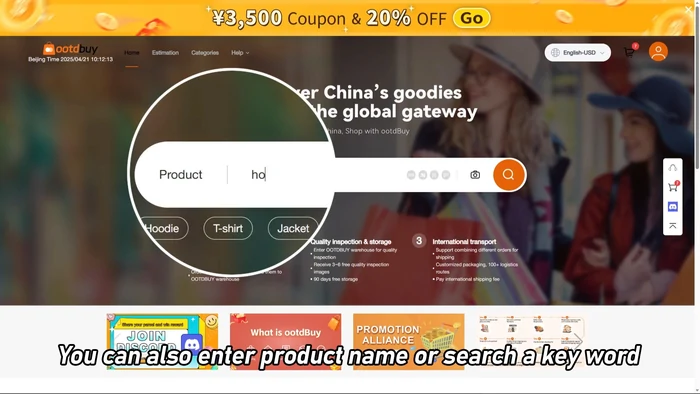
How to choose a finds list worth reading
Any list of finds is a claim that somebody looked. Four things tell you whether anybody still is.
Dead links. Open five entries at random. Chinese listings go down constantly, so one or two dead is normal and four is a list nobody has touched in months. This is the fastest test there is.
A date you can see. Not a copyright year in the footer. A date on the entry, or on the page, saying when somebody last checked.
Working category routes. If the category links land on empty pages or bounce through redirects, nobody is maintaining the structure either.
Something that could be wrong. A list that only says good things has not been tested against reality. Exclusions, caveats and dates are the signs of a page somebody will have to defend.
Apply the same four to this site. The word list carries the date each search was run, and the tiles on the front page link to categories we opened.
How to judge a seller before you paste the link
Three marketplaces sit behind almost everything an agent buys, and they do not behave the same way. Taobao is retail, with buyer reviews and a rating on the shop. 1688 is wholesale, where prices step down with quantity and a single unit is the worst price on the page. Weidian is the lightest of the three, where a shop can be new with no history at all.
So the first question is which of the three you are on, because it decides what evidence even exists. On Taobao you can read reviews and shop ratings. On 1688 you read the price tiers and the minimum order instead. On Weidian there is often nothing to read, which is information in itself.
After that, the same two checks everywhere. Does the listing have its own photographs rather than the same stock set you have seen on ten other shops. And does the description contradict the photographs anywhere, on material, on closure, on what is in the box. A contradiction you can see before you pay is worth more than any rating.

How to pick the right item inside one listing
A search sends you to a listing, not to an item. One listing can hold dozens of options, and the choice between them is yours and is not undone later.
Read the option names, not the thumbnails. Colour options are labelled in Chinese and the swatch images are often the same photograph tinted. The label is the thing that gets ordered.
Take the seller measurements over your usual size. Size error is outside the inspection scope, so nobody downstream will catch a bad size for you. Compare the table against something you already own.
Check what the price is attached to. On wholesale listings the headline figure is usually a quantity price, and one unit costs more.
Leave a message when the options cannot say it. If what you want is not expressible as an option, the order note is the only place it exists.
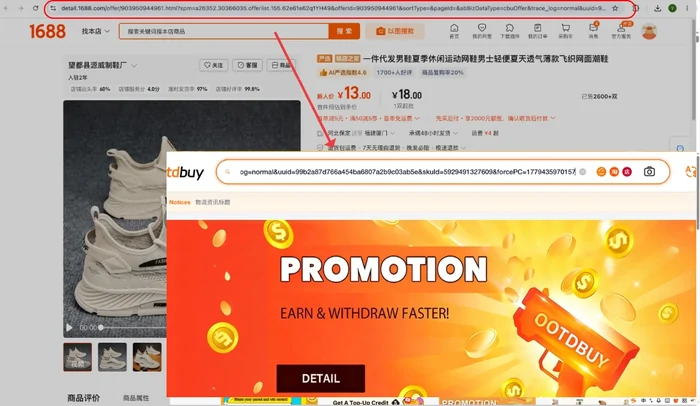
The fourth choice
Choosing an agent you can hold to something
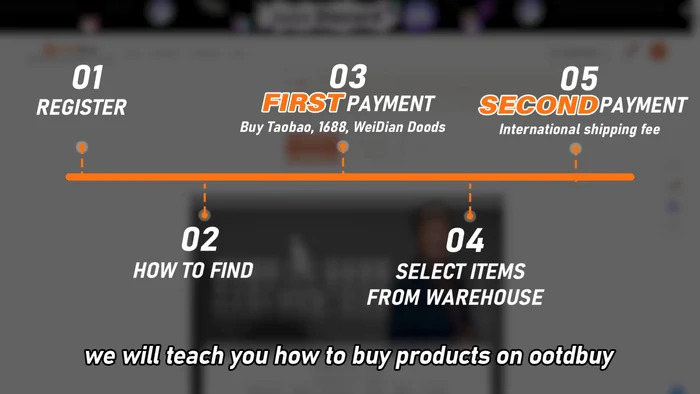
Every agent runs the same five stages: you register, you find something, you pay for the goods and the domestic leg, you pick what ships from the warehouse, then you pay the international leg. The stages are not where they differ.
Four things that are worth checking, and that most comparisons skip. Is there a named company. OOTDBUY publishes one, GLOBAL BUYPAL UK TECHNOLOGY LIMITED, registered in the United Kingdom. An agent that names no legal entity anywhere has given you nobody to complain to. Is the inspection scope written down, including what it excludes, rather than implied by marketing. How long is free storage, because that clock decides whether you can wait to combine parcels. What does the conversion cost, which is the section above and the one number that moves most.
What should make you walk away: no company name, no published inspection scope, and a support channel that is a form with no human behind it.
Why the same word returns a different shelf at a different agent
This guide is about what to type. The uncomfortable part of that is that the other agents you will see named index different marketplaces, so the word is only half of it: the other half is which marketplaces the agent has indexed, and that varies. Paste a Weidian link at an agent that only buys Taobao and 1688 and the word was never the problem.
So the first question about a rival is not what it charges. It is which platforms it will buy from, because that decides whether your word can return anything at all. The second is whether its search box needs an account before it will show you results, since a walled search box means you cannot test a word before committing to the agent.
The money question comes third, and it is not the service fee. Almost every agent in this market quotes zero there. What differs is the rate applied when your currency becomes CNY, which is charged once, itemised nowhere, and moves week to week. The chart puts that one number beside six other names so you can see the width of the band rather than a position in it.
What the chart deliberately does not do is rank. Sorting is alphabetical, and nothing is added into a score, because the parts people argue about hardest cannot be measured from outside: how a dispute actually goes, how a packer actually packs. A number made from those would be a guess with a decimal point.
Conversion gaps measured by qcradar.com on 2026-10-08 against a table they updated 2026-10-02. Worth re-reading before a large basket: this is a reading taken on one day, not a published rate.
Where this leaves you
Two places to go from here, depending on which of the four choices is still open.
Still choosing the item
The Chinese word for each category, with the date its search was run, plus the option words you will read on the order line.
Open the word listAlready chosen, now paying
What inspection covers and excludes, how to read the photos, and where the exchange rate takes its cut.
Read the QC and money page